
 Image 1 of 1
Did the first Christians really treat buildings as optional? Was "the early church met in houses" a statement about theology or just about what happened to be available?
Rev. Dr. Caleb Williams walks readers through the archaeological record, site by site, from Dura-Europos and Capernaum to the Church of the Holy Sepulchre, Bethlehem, and the shores of Galilee. What emerges is not a sermon but a pattern — one laid in mosaic, plaster, and mortar across centuries: wherever Christians gathered, they shaped space to fit what they were doing there.
Written for the thoughtful Christian rather than the specialist, Stones, Space, and Practice pairs serious scholarship with pastoral accessibility. Each chapter includes "Scripture & Stone" sidebars that set the biblical text beside the physical evidence, along with questions for personal or group reflection.
If you have ever wondered what the Holy Land actually shows us about the earliest Church — this is where to begin.
219 pages. First edition, 2026.
Did the first Christians really treat buildings as optional? Was "the early church met in houses" a statement about theology or just about what happened to be available?
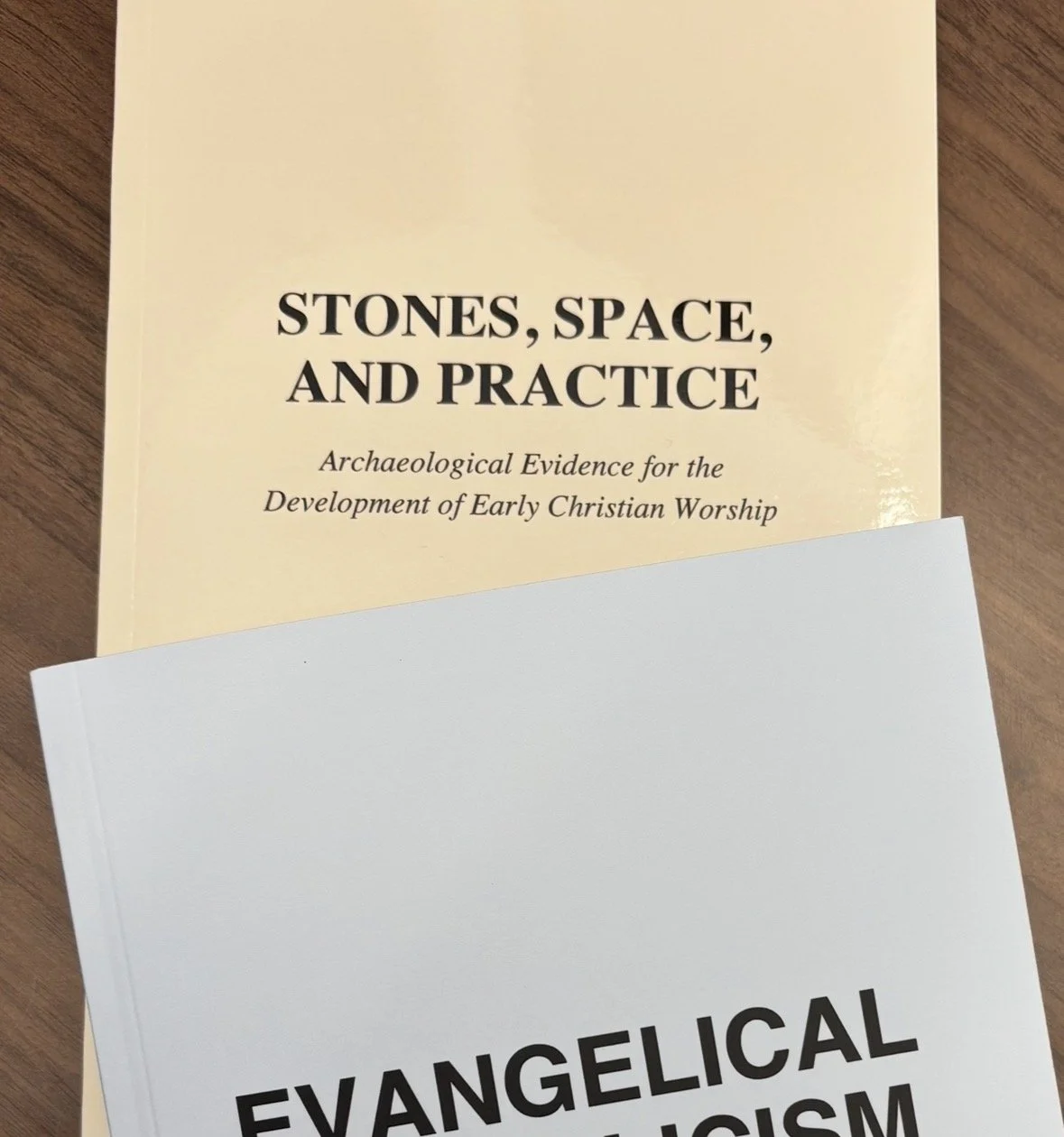
Rev. Dr. Caleb Williams walks readers through the archaeological record, site by site, from Dura-Europos and Capernaum to the Church of the Holy Sepulchre, Bethlehem, and the shores of Galilee. What emerges is not a sermon but a pattern — one laid in mosaic, plaster, and mortar across centuries: wherever Christians gathered, they shaped space to fit what they were doing there.
Written for the thoughtful Christian rather than the specialist, Stones, Space, and Practice pairs serious scholarship with pastoral accessibility. Each chapter includes "Scripture & Stone" sidebars that set the biblical text beside the physical evidence, along with questions for personal or group reflection.
If you have ever wondered what the Holy Land actually shows us about the earliest Church — this is where to begin.
219 pages. First edition, 2026.